
FAQ & Application
Common questions we hear about PVC Marble Panels, plus application guidance from real local installs.
Are PVC marble panels waterproof for interior walls?
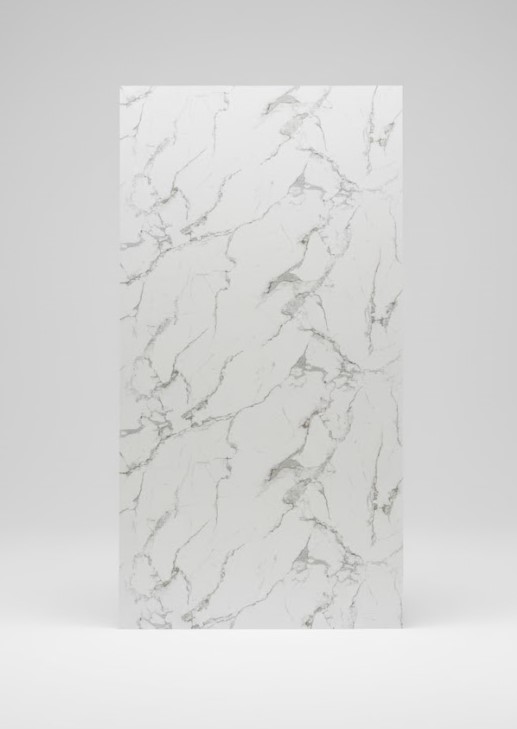
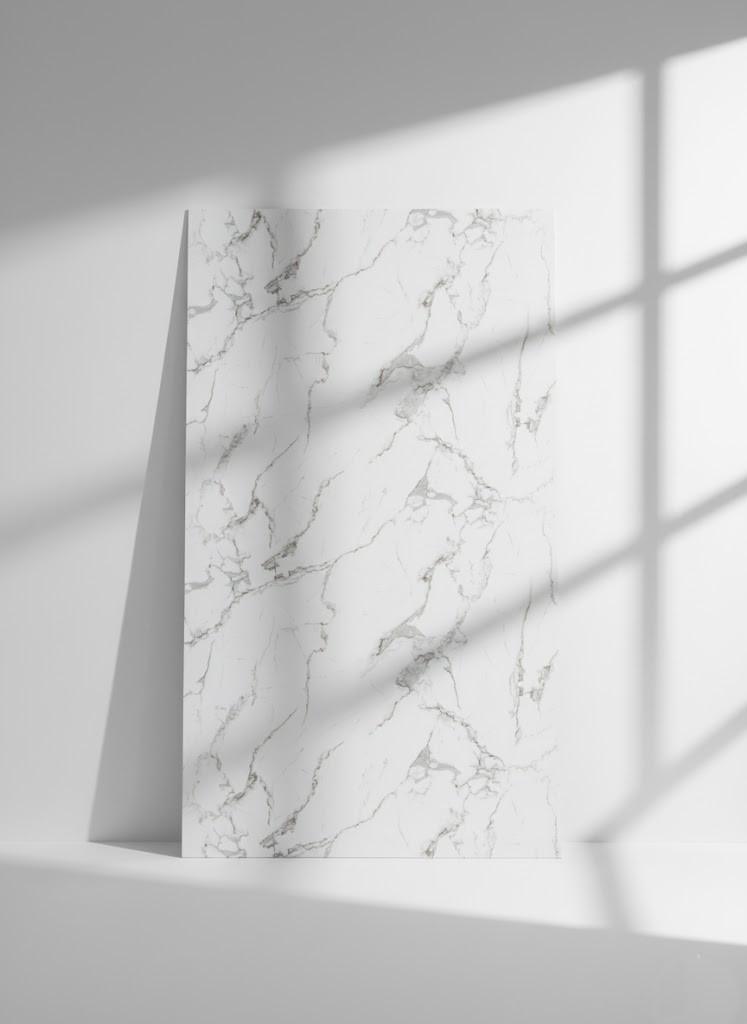
Calacatta 1 is a moisture-resistant interior wall solution and performs well in splash-prone spaces when installed correctly. It is a finish panel, not a full structural waterproofing membrane, so substrate prep and edge sealing still matter. For bathrooms, vanity walls, and feature walls, this category gives a stone look with easier handling and maintenance.
Are PVC marble panels a good choice for bathrooms, showers, and vanity walls?
They are commonly used for bathroom walls and vanity areas where clients want a premium marble look without heavy slab work. In direct shower zones, installation quality is critical and joint details must be sealed correctly. If your layout has mixed wet and dry sections, we can help map where PVC marble performs best.
Do PVC marble panels have UV resistance for bright interior spaces?
PVC marble panels generally hold up well in bright interiors, but constant direct sun can affect any finish over long periods. For high-sun walls, we recommend checking panel orientation, lighting, and nearby glazing conditions before finalizing. Calacatta 1 is often chosen for lobby and bathroom walls where controlled indoor light is the norm.
Can PVC marble panels be installed over existing tile or drywall?
In many remodels, yes, as long as the surface is stable, clean, and flat enough for proper adhesion. Uneven, damaged, or wet substrate should be corrected first. Your installer should confirm adhesive compatibility and transition details before installation starts.
How do I keep PVC marble panel seams looking clean?
Clean seams come from early layout planning, controlled adhesive spread, and proper trim or joint treatment. We recommend dry-laying key rows before permanent installation so veining direction and alignment look intentional. This is especially important on statement walls and lobby backdrops.
How should PVC marble panels be cleaned and maintained?
Use a soft cloth with mild soap and water for routine cleaning. Avoid abrasive pads or harsh chemicals that can dull the finish. With normal indoor care, Calacatta 1 stays low-maintenance and keeps a polished look without sealing or stone-specific treatments.
Can homeowners or contractors install PVC marble panels, and will you guide the process?
Yes. Many projects are material supply plus contractor installation. We support that model by reviewing layout, trims, sequencing, and cut strategy before install day. Homeowners can also send contractors to our Santee showroom for product walkthrough and planning support.
How does delivery work for PVC marble panels in San Diego and nearby cities?
We deliver from our San Diego base, with local delivery typically starting at $50. Final price depends on route, access, and order size. We can coordinate pickup, contractor pickup, or staged site delivery based on project timing.
Do you offer online payment for PVC marble panel orders?
Online payment is not available at this time. Orders go through quote and confirmation so finish, quantity, and logistics are validated first. That process helps avoid mismatches and keeps larger orders accurate.
Where do PVC marble panels work best in luxury and commercial spaces?
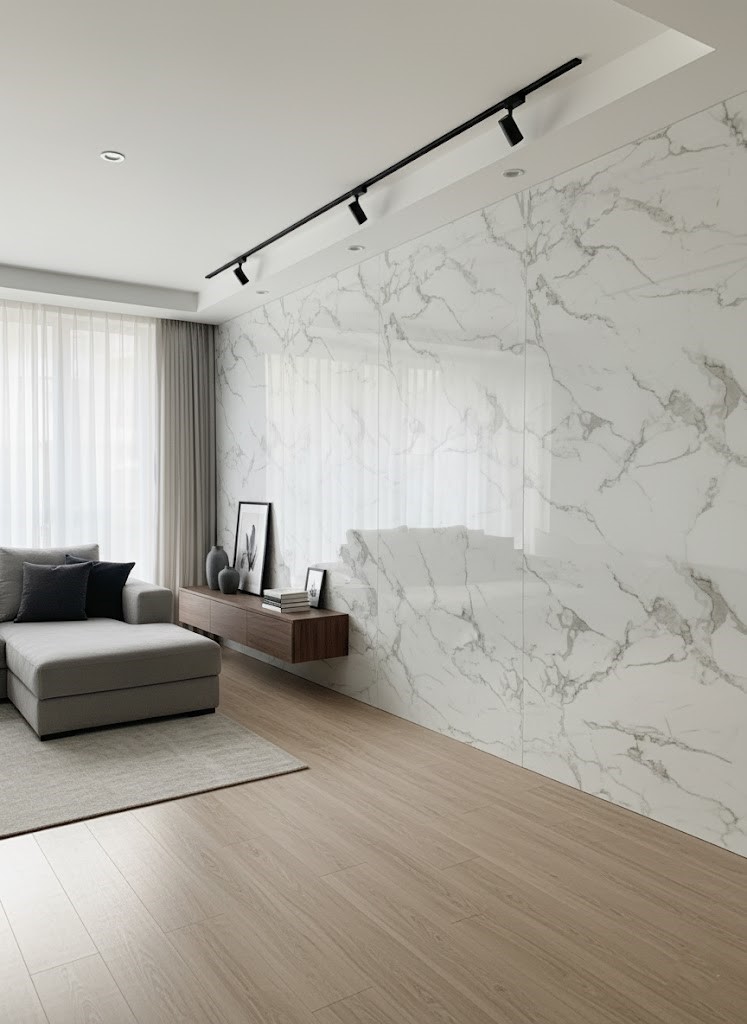
This category performs best on feature walls, reception walls, bathrooms, and hospitality-style lobbies where clients want a high-end marble visual without stone fabrication complexity. Calacatta 1 is frequently selected for custom homes and polished commercial interiors.
Do you only serve San Diego, or can PVC marble panels be delivered across Southern California?
San Diego remains our home base and primary service focus. We also deliver throughout Southern California when schedules align, including OC, Los Angeles, Inland Empire, and other nearby markets. Local-first support is still the core of how we operate.
What installation workflow helps avoid callbacks on PVC marble panel projects?
The best workflow is: confirm flat substrate, lock seam layout, dry-fit first, then install with proper adhesive and edge finishing. Most issues come from rushing seam planning or skipping substrate checks. Early coordination between homeowner, designer, and contractor keeps results clean.